
About Our Lab
Based at Bruyère and the Division of Palliative Care in the Department of Medicine at the University of Ottawa, we are a predominantly remote research team comprised of members across Canada.
Research Vision
To conduct mixed methods research to help ensure all people (regardless of background or health condition) receive the highest possible quality of palliative care.
Focus Areas
Our research spans four interconnected areas that together work to improve end-of-life care.
Health System Considerations
Examining how palliative care is organized, funded, and delivered across health systems to improve access and quality.
- Health (and behavioural) economics of home visits
- Hospital-to-home transitions (ACEPATH)
- Continuity of care
Non-Cancer Models of Palliative Care Delivery
Expanding palliative care access for people living with organ failure, neurological conditions, and other non-cancer diagnoses.
- Palliative care for people with end-stage kidney disease
- Palliative care for people with end-stage liver disease
- Palliative care for people with heart failure
Equity & Structural Vulnerability
Investigating structural vulnerability and equity for people living with serious illness.
- Palliative care for people with opioid use disorder (OUTLOUD)
- Medical Assistance in Dying (MAiD) for people with both mental and physical disorders
- Equity-, activism-, and advocacy-informed approaches across all projects
Arts-Based Knowledge Mobilization
Using art and design to translate palliative care research into accessible, meaningful public knowledge.
- Research-to-public-to-research feedback loop
- Installations, exhibits, and storytelling
Core Values
Core values of all projects:
Equity-, activism-, advocacy-informed
Interdisciplinary collaborations
Patient/caregiver engagement from conception to knowledge mobilization
Methods from epidemiology, biostatistics, behavioural science, health economics, arts, design, and humanities
Outputs that inform patient/caregiver experience, clinical practice, and/or policy
Methods Used
Mixed Methods
- • Convergent parallel
- • Sequential explanatory
Qualitative
- • Thematic analysis
- • Narrative analysis
- • Grounded theory
- • Case studies
- • Phenomenology
Admin & EMR Data
- • Case control studies
- • Retrospective cohort studies
- • Cost savings analyses
- • Cost effectiveness analyses
Primary Data Collection
- • Implementation studies
- • Randomized control trials
- • Cross-sectional studies
Reviews
- • Literature reviews
- • Scoping reviews
- • Systematic reviews
- • Rapid reviews
- • Meta-analyses
- • Qualitative meta-syntheses
Knowledge Mobilization
- • Arts-based
- • Policy-Informing
- • Patient and caregiver engagement
Lab Culture Goal
To have a high impact, always learning, thriving, healthy team.
Lab Culture Key Principles
Trust and transparency • Integrity • Proactivity • Balance and wellness
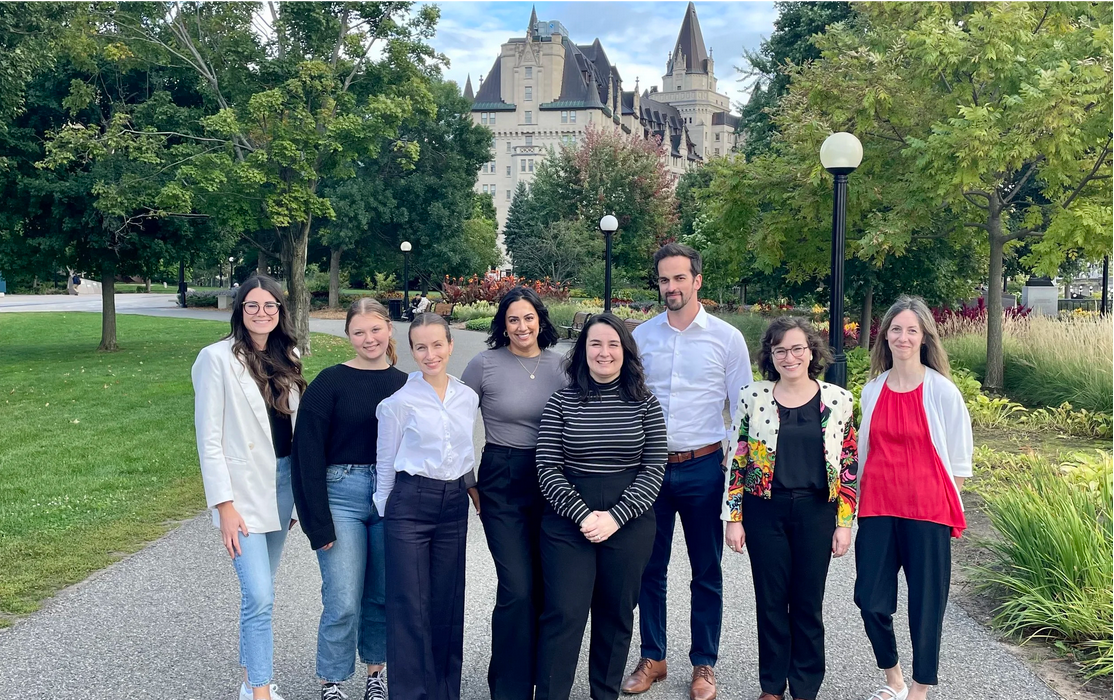

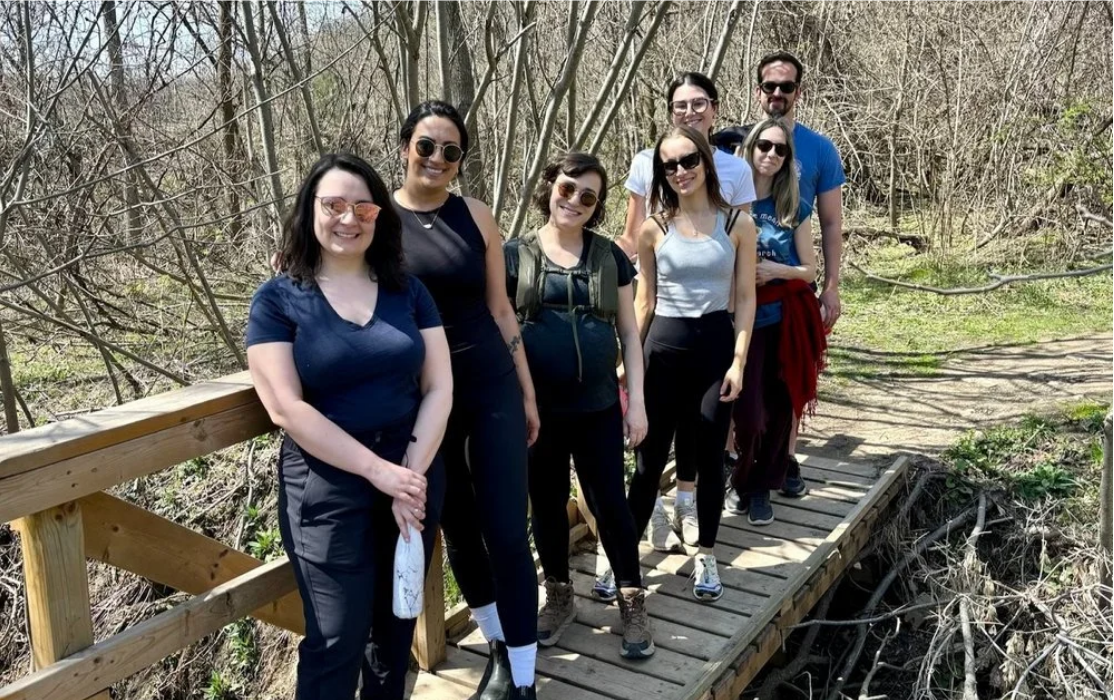
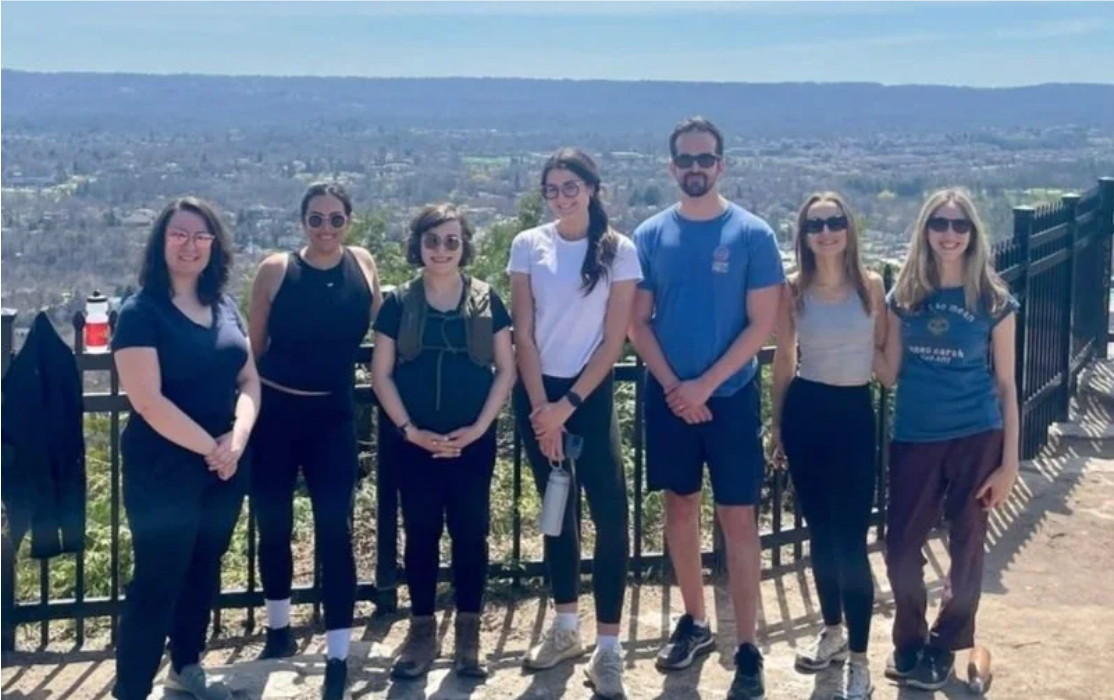
Our Team
Meet the researchers, students, and collaborators who make up the Isenberg Lab.
Dr. Sarina Isenberg is the Chair in Mixed Methods Palliative Care Research at Bruyère Health Research Institute in Ottawa, Canada. She is also an Associate Professor in the Department of Medicine and the School of Epidemiology and Public Health at the University of Ottawa, Adjunct Professor at the Department of Health Policy and Management at the Johns Hopkins Bloomberg School of Public Health, Affiliate Investigator in the Clinical Epidemiology Program at the Ottawa Hospital Research Institute, and an Adjunct Scientist at ICES University of Ottawa.
Dr. Isenberg has been a nominated principal or co-principal investigator on 32 research projects (totaling $4.9 million) and a co-investigator on 34 research projects (totaling $51.4 million) supported by regional, national, and international grant funding agencies. She has published over 100 peer-reviewed publications. Her work has been published in several leading health services and palliative medicine journals, including: Canadian Medical Association Journal, Journal of the American Medical Association, British Medical Journal, Medical Care, Palliative Medicine, and the Journal of Pain and Symptom Management.
Her achievements in research have been recognized by a number of awards, including the Canadian Institutes of Health Research Rising Star Early Career Award in Health Services and Policy Research (2022), the University of Ottawa Faculty of Medicine Early Career Researcher of the Year Award – Public Health and Epidemiology (2022), the University of Ottawa Department of Medicine PhD Scientist Award (2022), the University of Toronto Department of Family and Community Medicine Award of Excellence in Research - New Investigator (2020), and the American Association of Hospice Palliative Medicine Research Scholars Program (2020).
Dr. Isenberg is also an Editorial Advisory Board Member for the Journal of Pain and Symptom Management, and a Director on the St. Joseph’s Villa Foundation Board of Directors.
Dr. Isenberg has a PhD in Social and Behavioural Sciences from the Johns Hopkins Bloomberg School of Public Health, a Masters of Arts in English Literature from Queen’s University, and a Bachelors of Arts in English Literature (minors in Psychology and World Religions) from McGill University. Prior to pursuing her PhD, she worked as a management consultant for Deloitte’s National Health Services Team in Toronto.
In her free time, Dr. Isenberg enjoys spending time with family and friends, and pursuing her ever growing lists of hobbies including hiking, cycling, rock climbing, stained glass making, collaging, and reading.
Madeline McCoy received a Master of Science in Health Sciences from Carleton University and was awarded the SSHRC Canada Graduate Scholarship - Master's. Her master’s thesis was focused on barriers to and facilitators of access to public and community transportation for older adults in Ottawa and how transportation is a significant factor in reducing social isolation for older adults who are most “at-risk”. Madeline also holds an Honours Bachelor of Science in Health Studies and Psychology from the University of Toronto. Her independent research project resulted in a published scoping review exploring the association between public transportation and social isolation in older adults.
Madeline has been a research assistant since she began volunteering with the National Initiative for the Care of the Elderly (NICE) in 2017. Since then, she was a research assistant at Carleton University with the “Imagining Age-Friendly ‘communities within communities’: International Promising Practices” project and a Clinical Research Assistant with the Ottawa Hospital Research Institute. She is currently a Research Coordinator in the Isenberg Lab at Bruyère Health Research Institute. Madeline has experience supporting many qualitative, quantitative, and mixed methods research projects including assisting with grant applications, research ethics board applications, participant recruitment, data collection, data analysis, and knowledge translation.
For the past few years, Madeline has been passionate about improving quality of life for the aging population and using participatory action research approaches to learn from people who are impacted by research outcomes. These interests have merged into a focus on health care research, specifically in palliative and end-of-life care. Madeline’s research interests include transitions from hospital to home, palliative homecare and home visits, and the integration of arts-based methodologies and health care research.
In her free time, Madeline enjoys many art-related hobbies including painting, drawing, and DIY home projects. She enjoys getting outdoors, especially with her corgi, Perogi, who is always ready for an adventure. Madeline also spends lots of quality time with family and friends.
Dr. Lisa M. Boucher is currently a postdoctoral fellow with the Bruyère Health Research Institute and University of Ottawa. She has a PhD in Epidemiology and Public Health and a Master's in Cognitive Psychology. Her PhD was supported by a Canadian Institutes of Health Research Doctoral Research Award, and for this work Lisa won Faculty of Medicine awards for Best PhD Thesis in Epidemiology and for Equity, Diversity and Inclusion (EDI) Champion, Graduate studies.
Lisa's health services research has focused on improving self-management supports for people with chronic conditions, especially those with complex health and social needs. Lisa has expertise in qualitative, quantitative, and mixed methods research, as well as extensive experience conducting community-based participatory research that involves meaningfully engaging and amplifying the voices of people with lived experience. Her work has focused on people living with HIV or hepatitis C, people who use non-prescribed drugs, and people experiencing homelessness. Lisa’s research has contributed to understanding health and social inequities, with particular attention to socioeconomic marginalization, chronicity and multimorbidity, self-care and mutual care, primary and community care, and intersectionality.
Lisa's research interests continue to be centered around reducing health and social inequities for people with complex care needs. She is currently investigating how to better support people with opioid health harms at end of life, including those living in poverty and experiencing homelessness, as well as researching how social factors relate to long COVID.
Outside of work, Lisa enjoys relaxing activities, such as spending time in nature and with animals, yoga and traveling.
Dr. William Hall is a Health Economist trained at the University of British Columbia in Vancouver. He holds a bachelor’s degree in Molecular Biology, Biochemistry, and Business Administration as well as a Master’s and PhD degree in Health Economics.
Dr. Hall’s experience in economic evaluation spans multiple domains including pharmaceuticals, software, robotics, and care delivery models. He has supported over $2M of successful grants as a co-investigator and co-applicant including a ‘CIHR Catalyst Grant’, a ‘SPOR Rewarding Success Grant’ and an ‘Institute for Health System Transformation and Sustainability (IHSTS) Project Grant’. His PhD research focused on the application of health economic methods to support resource allocation decisions in the domain of home health for seniors.
He is currently working with the Isenberg Lab on the examination of physician and nurse practitioner provided home visits to patients at end of life.
Aria is a health services Research Coordinator in the Isenberg Lab at Bruyère Health Research Institute, supporting mixed methods research and arts-based knowledge translation for end-of-life care. She is also a Master's candidate in Epidemiology at the University of Ottawa, under the co-supervision of Drs. Jess Fiedorowicz and Sarina Isenberg. Aria is passionate about understanding and improving the quality of life and care for marginalized and underserved populations, and bringing research to life in creative ways that resonate, engages, and empowers.
In her free time Aria enjoys volunteering in her community, including with the Ottawa Victims Services, dancing, doing hot yoga, and loving her family & friends.
Taylor Shorting received her Bachelor of Arts (hons.) in psychology, a diploma in social services, and a certificate in addiction studies from Vancouver Island University (VIU). As an honour’s student, she was awarded the VIU REACH grant to carry out her year-long independent research study.
Concurrent with completing her undergraduate degree, Taylor served as a research assistant in the Environmental Psychology Research Lab for over three years. Her research focused on both natural and built settings, ranging from coastal and mountainous communities to hospital environments on Vancouver Island and surrounding areas.
Taylor has since developed a passion for exploring the impacts of built environments on human well-being, specifically how residential environments impact the psychosocial wellbeing of patients and caregivers who transact with the particular space.
In her free time, Taylor works alongside children and families navigating the foster care system, hiking with friends and family, and taking her boxer, Marvel, for adventures.
Kyle Drouillard (they/them/iel) holds an Honours Bachelor of Science with Specialization in Psychology from the University of Ottawa, where they completed an undergraduate thesis focused on US Peace Corps volunteers' experiences with mental illness. Following a three-year sojourn to the Republic of Korea, Kyle returned to the University of Ottawa to complete a Master of Science in Interdisciplinary Health Sciences for which they wrote an award-nominated thesis exploring sexual and gender diverse people's experiences with intimate partner violence in Ontario.
Kyle is an experienced qualitative researcher, having started as a volunteer with the now-defunct Institute for Population Health at the University of Ottawa in 2014 as a transcriptionist. Since returning to academia in 2020, Kyle has led and supported sexual and reproductive health and rights research in Canadian and international contexts on family planning, gender-based violence, and intimate partner violence. In 2023, Kyle was Coordinator for an international collaborative of sexual and reproductive health researchers and a production assistant for the peer-reviewed journal Perspectives on Sexual and Reproductive Health. Kyle is also an experienced teacher, having guest lectured for courses on the social determinants of health, sexual and reproductive health, human sexuality, health communication, and critical appraisal of health research.
As Research Coordinator for the Isenberg Lab at the Bruyère Health Research Institute, Kyle brings their passion and commitment to health equity, bodily autonomy, and improved health and well-being for vulnerable and systemically marginalized populations to palliative and end-of-life care research. Currently, Kyle is interested in the palliative care experiences of sexual and gender diverse patients and their caregivers and arts-based research methods and knowledge translation.
Kyle is an avid (and well-reviewed!) home cook, and enjoys connecting to loved ones and making memories through food. They can be found plying others with homemade snacks and sweets, searching for new things to ferment, and exploring Danish, Korean, and Mexican cuisine. Kyle also enjoys film and film history, travelling alone or with friends, and hiking and cycling.
Sabah is a Masters candidate in Epidemiology at the University of Ottawa. She completed her Bachelors in Biology with a minor in Applied Ethics from the University of Ottawa in 2022. Since then, she has been working in the Deputy Minister’s Office at Fisheries and Oceans Canada.
Sabah volunteered as a Recreational Therapist’s Assistant at Perley Health and worked closely with older adults and veterans with Alzheimer’s and dementia. This experience, among others, solidified her interest in health care and quality of life for older adults.
Sabah works as a research student in the Isenberg Lab. Her research interests include access to end of life care, social determinants of health and health equity.
In her free time, Sabah loves to be active and travel.
Prabasha is a Masters candidate in Epidemiology at the University of Ottawa. He completed his Bachelors of Science in Biomedical Sciences with a minor in Psychology from the University of Ottawa in 2024.
Prabasha has been a research assistant with the Bruyere Health Research Institute for over 3 years, working with the Hsu Lab and focusing on projects around inequities in care for older adults. He has used ICES and CLSA datasets to conduct quantitative analysis on his projects.
Prabasha works as a research student in the Isenberg Lab. His research interests include improving quality of care towards the end-of-life, access to home care, and improving on care for marginalized populations. Prabasha aims to expand on his research skillset by working on a mixed-methods thesis centered around hospital-to-home transitions, gaining invaluable qualitative research experience with this project.
In his free time, Prabasha loves to play basketball and baseball recreationally, as well as taking up running. He also enjoys cooking and learning to cook different cultural foods.
Ladees Al Hafi is a research volunteer with a BSc from the University of Waterloo and a current MSc candidate in Aging and Health at Queen’s university.
Her experience in research is diverse with a background that includes assisting with psychology recruitment studies, exploring the effects of antidepressants on fish behaviour through an independent research project, and currently working as a child mental health research student with SickKids Hospital.
Ladees’s research interests centre around palliative care and the experience of patients and their caregivers during the transition from hospital to home. Her focus is on helping to identify strategies that can optimize the transition process and improve outcomes for patients and caregivers.
In her free time, ladees partakes in painting, exercising, and volunteering with local community organizations such as Big Brothers Big Sisters.
Sathana is a fourth-year Biomedical Science student at the University of Ottawa with a focus on neuroscience. She is currently completing an honours research project investigating the role of the transcription factor NR4A2 in dopaminergic neurons using zebrafish models. She also volunteers in the Isenberg Lab, where she assists with a variety of ongoing projects and contributes to the lab’s research efforts. She is broadly interested in neuroscience and the molecular mechanisms underlying neuronal development, function, and disease, with a particular interest in understanding how genetic pathways influence dopaminergic neurons. Outside of academics, she leads MAS Lifepacks, an initiative that prepares and distributes care packages to members of the local community experiencing homelessness, and enjoys staying active.
Mirabella Marciante is a research volunteer in the Isenberg lab at the Bruyère Health Research Institute. She is a fourth year undergraduate student at the University of Toronto, currently completing a double major in Biology and Anthropology. She is interested in pursuing graduate studies in the future.
Mirabella's academic background combines biological and social science perspectives on health. Through her studies, she has explored topics including public health, epidemiology, human biology, and forensic anthropology.
Mirabella’s research interests include health equity, public health, palliative care, epidemiology, mental health disorders and the social factors that influence health outcomes. She is particularly interested in research that improves patient experiences and helps ensure equitable access to high-quality healthcare. Outside of her studies, Mirabella volunteers at a local ESL café, where she supports English language learners and engages with members of diverse communities.
In her free time, Mirabella enjoys traveling, hiking, and reading. She also loves fashion, and exploring new experiences with friends and family.
Student Supervision
Primary Supervisor
Prabasha Rasaputra
MSc in Epidemiology, University of Ottawa
"Discharge readiness for patients transitioning from hospital to home"
September 2024 - Present
William Hall
Post-Doctoral Fellow, Bruyère Research Institute
July 2023 - Present
Lisa Boucher
Post-Doctoral Fellow, Bruyère Research Institute
March 2023 - Present
Co-Supervisor
Aria Wills
MSc in Epidemiology, University of Ottawa
"Topic to be determined"
September 2024 - Present
Primary Supervisor
Declan Mulligan
PGY3 Palliative Care
"Advancing the Care Experience for patients receiving Palliative care as they Transition from hospital to Home (ACEPATH): Mixed-methods evaluation of implementation measures in a pilot study of an intervention to improve hospital‐to‐home transitions for patients and family caregivers"
July 2025 - July 2026
Julia Britton
PGY3 Palliative Care
"Using public art to collect and share data on end-of-life care preferences"
July 2025 - July 2026
Jessica Cheng
MPH, University of Ottawa
"Abortion access in Canada: A Health Equity Impact Assessment"
September 2023-December 2023
Ruby Chang
PGY3 Palliative Care
"A process evaluation of a palliative care outpatient clinic for people with Heart Failure"
October 2022-September 2023
Ronnie Daoud
PGY3 Palliative Care
"The experience of a patient with opioid use disorder receiving palliative care: A case study"
July 2021-July 2022
Jacqueline Carverhill
PGY3 Palliative Care
"Dying Matters: Better Understanding Palliative Care Experiences Amongst Structurally Vulnerable Patients"
July 2021-July 2022
Cassandra Graham
PGY4 Palliative Care
"Health care providers perceptions and experiences of a home-based palliative care program for patients with heart failure"
August 2019-August 2021
Trevor Morey
PGY3 Palliative Care
"Patient and Caregiver’s perceptions of “continuity of care”: A qualitative study"
August 2019-August 2020
Naushin Walji
PGY3 Palliative Care
"Examining health equity and demographics in an inpatient palliative care unit."
August 2019-August 2020
Co-Supervisor
Sabah Tasnim
MSc Epidemiology, University of Ottawa
"Effectiveness of interventions and policies that enable the provision of home visits delivered by physicians and nurse practitioners: a systematic review"
September 2023-August 2025
Logan Roy
MSc Health Services Research, University of Toronto
"Health care providers perceptions of transitions from hospital to home in the context of palliative care."
September 2019-October 2021
Committee Member
Ahmed Kayssi
PhD Health Policy and Management, Johns Hopkins Bloomberg School of Public Health
"Emergency department visits following vascular surgery: A mixed methods study"
December 2019-March 2026
Mary Scott
MSc Epidemiology, University of Ottawa
"Which primary care physicians deliver home visits to their dying patients in Ontario? A retrospective cohort study"
September 2019-January 2022
Wenshan Li
PhD Epidemiology, University of Ottawa
"Examining caregiver distress among seniors with care needs: a population-based study"
August 2019-March 2023
External Examiner
Monisha Kabir
MSc Health Systems, University of Ottawa
"Exploring the experiences and sense-making of patients and informal caregivers in the inpatient specialist palliative care context."
December 2021-January 2022
Our team honours the Algonquin Anishnaabeg people, whose traditional unceded territory the City of Ottawa is located. We extend this respect to all First Nations, Inuit, and Metis peoples, their Elders, their ancestors, and their valuable past and present contributions to this land.